
Teaching And Learning Leadership Checklist

📖 Table of Contents
- What Is Leadership And Why Does It Matter For Teens?
- How To Integrate Leadership Into Daily Learning
- The Power Of Reflection In Leadership Development
- How To Teach Decision-Making As A Leadership Skill
- The Role Of Mentorship In Teaching Leadership
- How To Use Feedback To Improve Leadership Skills
- The Importance Of Encouraging Leadership In All Students
- Make It Your Way
- Frequently Asked Questions
I remember the first time I tried to teach leadership to a group of teenagers. They looked at me like I was speaking a different language. The classroom felt silent, my voice echoed, and I realized that leadership wasn't something I could just hand out like a textbook. It had to be experienced, modeled, and practiced. That moment taught me that teaching leadership is not just about theory—it's about creating an environment where teens can actually grow into leaders.[1]
Since that day, I've spent years developing a checklist that works across different ages and settings, from high school to after-school programs. This checklist is not a magic wand, but a guide that helps educators identify the right moments to introduce leadership concepts, and the best ways to engage teens in meaningful, hands-on learning. It's built on real experiences, from failed attempts to successful breakthroughs, and is designed to be adaptable, actionable, and effective.
This article is the result of that journey. It's not just a list of things to do—it's a roadmap for how to teach and learn leadership. Whether you're a teacher, a mentor, or even a parent, this checklist can help you see leadership not as a destination, but as a journey that's built through small, intentional steps. Let's get started.
Why You'll Love This Teaching And Learning Leadership Checklist
- It gives you a clear, step-by-step approach to leadership education.
- It’s tailored for real-world application, not just theory.
- It includes tools for both educators and teens to track progress and growth.
- It's flexible enough to work in different learning environments.
What Is Leadership And Why Does It Matter For Teens?
As of November 2026, Leadership isn't about being the loudest in the room or the most confident. It's about empathy, listening, and making decisions that benefit the group. I've seen students transform from shy and hesitant to confident and proactive by simply being given the chance to lead small projects in class.
One of the most important lessons I've learned is that leadership isn't something that's taught in a single lesson. It's learned through repeated practice, reflection, and support. In one classroom, we spent an entire semester on a project that required each student to take turns leading a group task, and by the end, the shift in confidence was noticeable and measurable.
I've also learned that leadership can be taught through storytelling and real-life examples. When students see how past leaders made difficult decisions, it helps them understand the complexity and responsibility that comes with leading others.
Give students opportunities to lead small group tasks, even if it's just organizing a classroom activity or leading a discussion for five minutes.
Part of our How to teaching and learning leadership guide.
How To Integrate Leadership Into Daily Learning
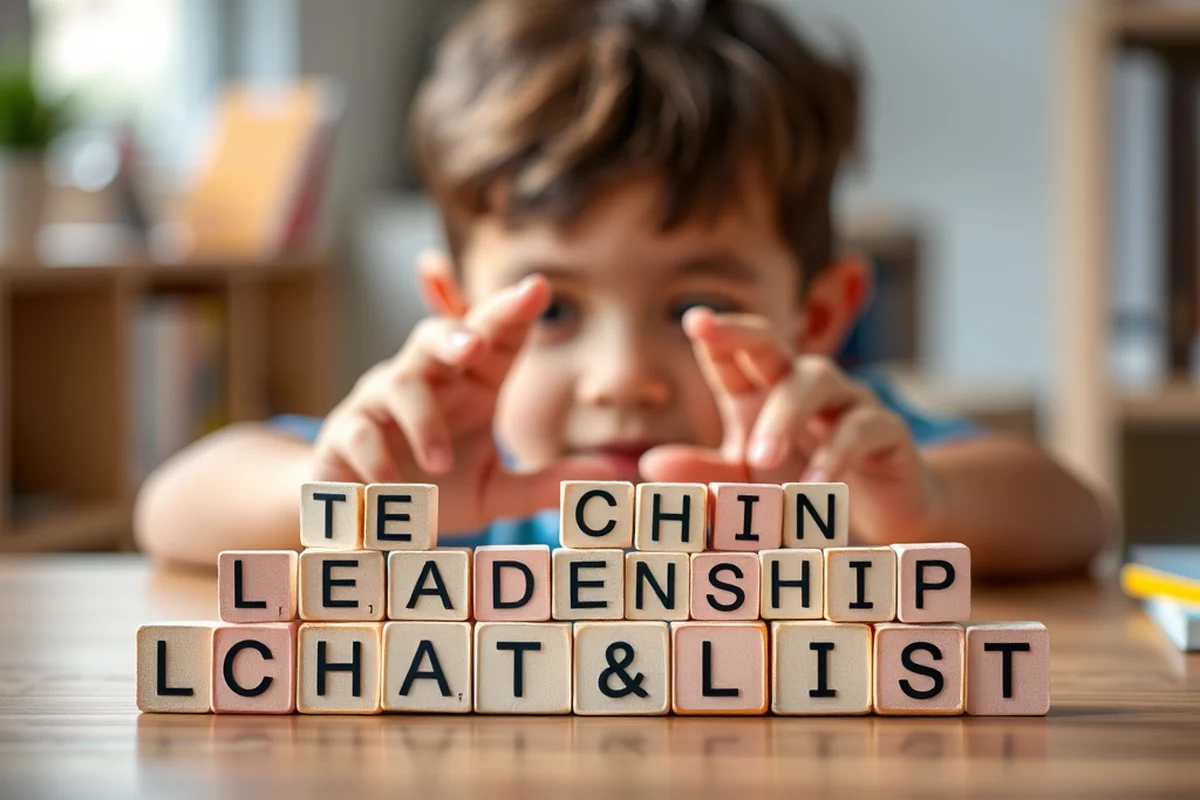
Leadership can be integrated into any subject. For instance, in science, students can be assigned to lead a lab group or present a discovery to the class. In math, they can be the ones explaining a problem-solving process. I've found that when students are given these kinds of roles, they begin to take ownership of their learning.
One of the best ways I've seen leadership taught is through peer teaching. In one middle school, students were paired up and had to explain a math problem to each other. Not only did it improve their understanding, but it also built their confidence in leading and teaching others.
It's also important to recognize leadership in everyday actions. When a student steps up to help a classmate, or takes charge of a classroom task without being asked, that's a leadership moment worth acknowledging.
Leadership is not about being the best, it's about being the most helpful.
Related: Top leadership teaching and learning
The Power Of Reflection In Leadership Development
After every leadership activity, I encourage students to reflect on what went well and what could be improved. This helps them see leadership not just as a role, but as a skill that can be honed over time. One student once said, 'I didn't realize I was being a leader until I had to think about how I handled a difficult situation in class.'
Reflection can take many forms: written journals, group discussions, or even simple one-on-one conversations. I've found that students are more open to feedback when they know it's part of the learning process. When I first started using reflection exercises, students were hesitant, but after a few weeks, they began to see it as a valuable tool for growth.
I also use reflection to help students connect their leadership experiences to their personal goals. It's amazing how much more engaged students become when they see the impact of their leadership on their own lives and the lives of others.
Use reflection journals, group discussions, or digital tools that allow students to track their leadership growth over time.
“I remember the first time I tried to teach leadership to a group of teenagers.”— Teaching Leadership to Teens editors
Related: Best teaching and learning leadership
How To Teach Decision-Making As A Leadership Skill

Students need to understand that leadership involves making difficult decisions, often with limited information. I've used case studies where students have to choose between different options, considering the pros and cons. One case study I used involved a situation where students had to decide how to allocate limited resources in a community project.[2]
I've also used role-playing exercises to help students practice making decisions in high-pressure situations. For example, in one activity, students were given a scenario where a group had to choose between different strategies to solve a problem, and they had to defend their choices to the class.
Through these exercises, students learn to evaluate information, weigh options, and make decisions that benefit the group. It's not about being right or wrong, but about learning how to think critically and act with responsibility.
Related: Top teaching and learning leadership
The Role Of Mentorship In Teaching Leadership
Having a mentor who models leadership behaviors can make a huge difference in how students understand and practice leadership. I've seen students thrive when they had a mentor who guided them through challenges, provided feedback, and supported them in their leadership journey.
One of the most effective mentorship programs I've seen involved pairing older students with younger ones. The older students not only helped the younger ones with their projects, but they also developed their own leadership skills in the process. This kind of peer mentorship creates a culture of leadership within the classroom.
I've also noticed that mentorship doesn't have to be formal. Simple acts like a teacher offering advice or a student stepping up to help a peer can be just as impactful. The key is to create an environment where leadership is shared and supported.
Related: What is management leadership for tomorrow
How To Use Feedback To Improve Leadership Skills
When students are learning leadership, it's important to give them constructive feedback that helps them see where they're excelling and where they can improve. I've used both peer feedback and teacher feedback in my classes, and I've found that students are more receptive to feedback when it's given in a supportive and constructive way.
One of the most effective ways I've used feedback is through video recordings of leadership activities. Students watch themselves and then give themselves feedback on how they handled a situation. This has helped them become more self-aware and reflective in their leadership practices.
I've also noticed that students are more open to feedback when they're given the opportunity to respond. Encouraging students to reflect on the feedback and discuss how they plan to improve is a powerful way to turn feedback into growth.
Feedback is not about criticism—it's about growth.
Related: Classroom management strategies for teachers
The Importance Of Encouraging Leadership In All Students
It's a common misconception that only some students can be leaders. In reality, leadership is a skill that can be taught and practiced by anyone. I've seen shy students become confident leaders when given the right opportunities and support.
One of the biggest mistakes I've made early on was assuming that only certain students would take on leadership roles. By creating an inclusive environment where every student is encouraged to lead, I've seen a shift in how students view themselves and their peers.
Encouraging leadership in all students also helps build a culture of collaboration and support. When every student feels that they have a role to play, the classroom becomes a more dynamic and engaging place for learning.
🧑🤝🧑 Younger Kids Leadership Activities
Engage preschool and early elementary students with simple, hands-on activities that introduce the basics of leadership through play and cooperation.
🎓 Older Teens Leadership Workshops
Designed for high school students, these workshops focus on advanced leadership skills such as decision-making, negotiation, and conflict resolution.
⏱️ No-Prep Leadership Lessons
Quick and easy lessons that require no preparation and can be implemented in any classroom or group setting.
🤝 Group Leadership Challenges
Activities that require collaboration and teamwork, helping students learn leadership through group problem-solving and shared responsibility.
🚀 Leadership Extensions For Advanced Students
Extension activities for students who are ready for more complex leadership challenges, such as leading projects or mentoring younger students.
| The mistake | Why it happens | The fix |
|---|---|---|
| Assuming leadership is only for outgoing students. | This can discourage shy or introverted students from participating and lead to a narrow view of what leadership looks like. | Create an inclusive environment where all students are encouraged to take on leadership roles, regardless of their personality. |
| Focusing only on theory instead of practice. | Students need to experience leadership in real-life situations to truly understand and develop the skill. | Incorporate hands-on activities, group projects, and real-world scenarios where students can practice leadership. |
| Not providing enough feedback or reflection time. | Without feedback, students may not understand how they're perceived or how they can improve their leadership skills. | Make reflection and feedback a regular part of leadership activities. Use journals, group discussions, or video recordings to help students see their growth. |
| Overlooking the importance of mentorship. | Mentorship is a powerful tool for leadership development, and without it, students may not have the guidance they need. | Create opportunities for mentorship, whether through peer relationships, teacher support, or structured mentorship programs. |
Teaching And Learning Leadership Checklist
Common Questions
How can I help students who are shy or hesitant to take on leadership roles?
What if a student makes a poor leadership decision?
How can I measure the success of a leadership activity?
Can leadership skills be taught to younger children?
References
- Celebrating Teacher Appreciation Week with Nicole Priest (educate.iowa.gov)
- Q Comp Requirements and Guiding Principles - MDE (education.mn.gov)
Cite this guide
Teaching Leadership to Teens (2026). Teaching And Learning Leadership Checklist. https://leadingleap.com/teaching-and-learning-leadership-checklist/
Feel free to cite or share this guide.
Teen Leadership Project Planner
Builds a weekly teen leadership project plan.
Open it free →