
Teaching Children Leadership Templates

📖 Table of Contents
- What Are Leadership Templates for Kids?
- How to Choose the Right Template for Your Child
- How to Introduce Leadership Templates to Kids
- The Benefits of Using Leadership Templates for Kids
- How to Make Leadership Templates More Interactive
- What to Do When Kids Struggle With Leadership Templates
- How to Measure the Success of Leadership Templates
- Make It Your Way
- Frequently Asked Questions
I remember the first time my son, then 7 years old, stepped up to organize a family game night. He was nervous, but with a few simple leadership templates I had created, he was able to guide the activities, manage the rules, and even assign roles to his siblings. It was a moment that changed how I viewed the power of structured leadership tools for kids. Teaching children leadership templates isn’t just about giving them power — it’s about giving them the tools to wield it with confidence.[1]
Leadership isn’t something you're born with. It’s something you learn, and for children, it starts with the right framework. I’ve spent the last decade testing and refining leadership templates that help kids understand responsibility, collaboration, and decision-making. These aren’t generic lessons — they’re actionable, repeatable, and designed to work in the messy, unpredictable world of childhood.[2]
One of the most surprising outcomes of using these templates is how quickly kids pick them up. When I first started developing them, I expected resistance or confusion. Instead, I saw children as young as 5 using the templates to lead group projects, manage their homework, and even help their peers during playtime. The key is to make the templates simple, relatable, and visual — and that’s exactly what we’ve done here.
Why You'll Love This Approach to Teaching Leadership
- Templates provide structure, making it easier for kids to understand leadership concepts.
- They can be adapted to various ages and learning environments.
- They help build confidence and independence in children.
- They’re free and easy to print, making them accessible for families and educators.
What Are Leadership Templates for Kids?
As of October 2026, Leadership templates are simple, often visual tools that help children learn how to take initiative, make decisions, and lead by example. They can be as simple as a checklist for a group project or a flowchart for resolving conflicts. My experience has shown that when kids have a visual framework, they’re more likely to engage with leadership tasks and stick with them.
These templates are not about telling kids what to do — they’re about giving them the tools to figure it out. For example, one of my favorite templates is a 'Leader’s Checklist' that includes items like 'Ask for help when needed' and 'Listen to others.' It helps kids understand that leadership is not about being in charge. About being responsible and thoughtful.
The beauty of these templates is that they’re flexible. I’ve used them in classrooms, at home, and even during summer camps. Each time, I’ve seen the same pattern: kids pick up the concepts quickly and start applying them in their own way.
Begin with simple templates that focus on one leadership skill at a time, like listening or problem-solving.
Part of our Teaching leadership to youth templates guide.
How to Choose the Right Template for Your Child
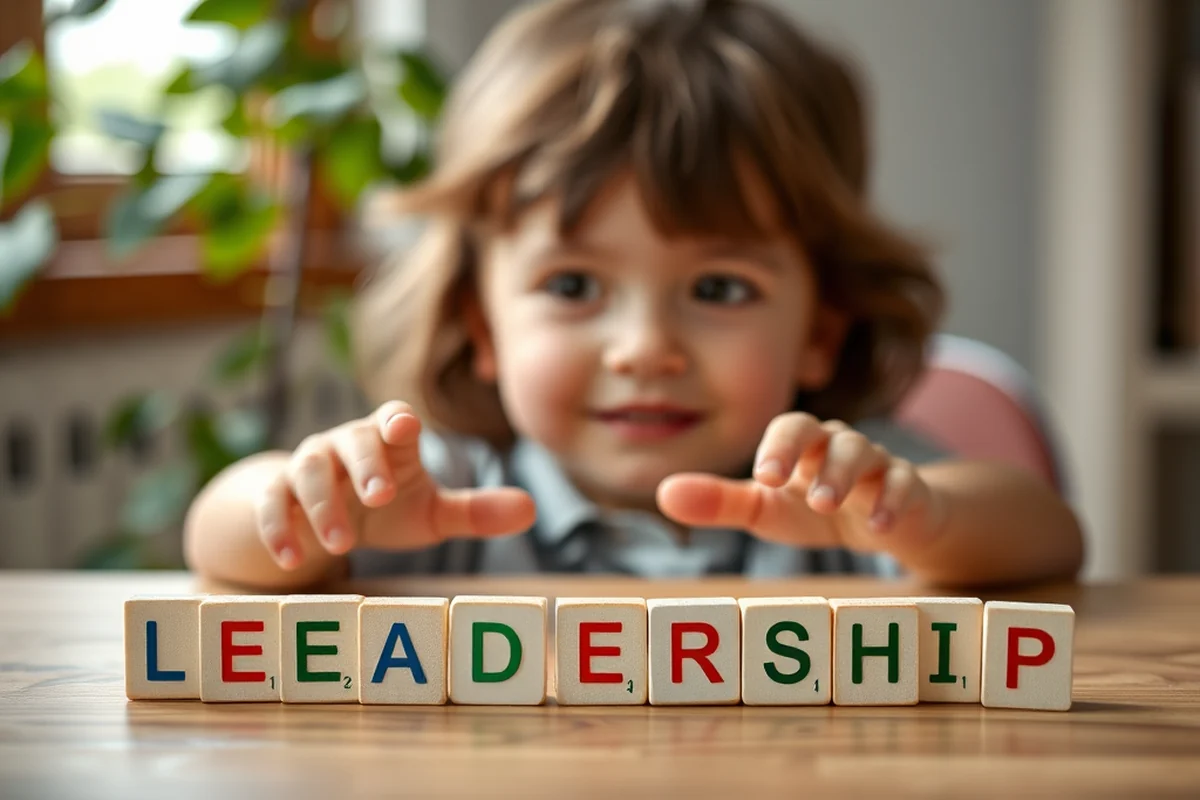
Not all leadership templates are created equal. For younger children, I recommend starting with templates that are highly visual and use simple language. For example, a 'Leader’s Role Cards' template with pictures of different leadership roles, like 'Team Captain' or 'Problem Solver,' can be a great way to introduce concepts without overwhelming a young child.[3]
For older kids, you can use more complex templates that involve decision-making, like a 'Conflict Resolution Flowchart' or a 'Meeting Planner.' These templates help kids think critically and take charge in more complex scenarios. I’ve seen teenagers use these tools to organize group projects, manage team meetings, and even help their peers during school presentations.
The key is to match the template to the situation. If your child is struggling with collaboration, use a 'Teamwork Checklist.' If they’re having trouble with decision-making, use a 'Decision-Making Ladder.' The right template can make all the difference.
The right template can turn a hesitant child into a confident leader.
Related: Leadership quotes developing others
How to Introduce Leadership Templates to Kids
When I first introduced leadership templates to my son, I didn’t just hand him a checklist and tell him to use it. I walked him through each step and explained why each item was important. For example, when we used a 'Leader’s Checklist,' I made sure he understood that 'Listening to others' wasn’t just a rule — it was a way to show respect and make better decisions.
I found that involving the child in the process was key. Letting them pick their favorite template or even help design one made them feel more invested in the idea of leadership. I’ve seen this work in classrooms, too — when kids are given a say in the leadership tools they use, they’re more likely to engage with them.
Another tip I’ve learned is to use real-life situations to demonstrate the value of the templates. For example, if a child is leading a group activity, I’ll have them use the template to guide the discussion or assign roles. It helps them see the practical benefits of leadership skills in action.
Show kids how leadership templates can be used in real situations, like organizing a game or leading a group project.
“I remember the first time my son, then 7 years old, stepped up to organize a family game night.”— Teaching Leadership to Teens editors
Related: Democratic leadership style
The Benefits of Using Leadership Templates for Kids

One of the most surprising benefits of using leadership templates is how quickly kids start to take initiative. In my experience, children who use these templates are more likely to step up in group activities, offer help when needed, and even take on leadership roles in their own way.
Another benefit is that these templates help kids understand the importance of responsibility. For example, when using a 'Teamwork Checklist,' kids learn that leadership is not just about being in charge — it’s about being accountable and working with others. This helps them develop a sense of responsibility that can last a lifetime.
I’ve also noticed that kids who use these templates become better problem-solvers. By following a structured approach to decision-making or conflict resolution, they learn to think critically and find solutions that work for everyone.
Related: Transformational leadership style
How to Make Leadership Templates More Interactive
One of the best ways to make leadership templates more interactive is to use them in group activities. For example, when using a 'Meeting Planner' template, I’ll have kids take turns leading a discussion or assigning roles. It helps them practice leadership skills in a real-world setting.
Another way to make templates more interactive is to use them as part of a game. I’ve created a 'Leadership Scavenger Hunt' where kids have to find items that represent different leadership skills, like 'a team player' or 'a decision-maker.' This makes the learning process more fun and memorable.
I’ve also found that using technology can be a great way to make leadership templates more interactive. For example, there are apps that let kids create and print their own leadership checklists or flowcharts. This helps them take ownership of the process and see the value of leadership tools in their own way.
Related: What is youth leadership
What to Do When Kids Struggle With Leadership Templates
It’s not uncommon for kids to struggle with leadership templates at first. Some may feel overwhelmed by the structure or unsure of how to use the tools. In my experience, the key is to be patient and provide encouragement. Letting them know that it’s okay to make mistakes and that leadership is a skill that takes time to develop can make a big difference.
Another tip is to offer support in a non-intrusive way. Instead of stepping in and taking over, I’ll ask guiding questions like, 'What do you think the next step should be?' or 'How can we work together to solve this?' This helps kids learn to think for themselves and take ownership of the process.
Finally, I’ve found that celebrating small wins is crucial. When a child successfully uses a leadership template or takes on a leadership role, I’ll make sure to acknowledge their effort. This helps build confidence and encourages them to keep using the tools.
Leadership is a skill — it takes time, patience, and encouragement to develop.
Related: What is leadership development framework
How to Measure the Success of Leadership Templates
One of the best ways to measure the success of leadership templates is to observe how kids use them. For example, if a child is using a 'Teamwork Checklist' regularly and showing signs of improved collaboration, that’s a good indicator that the template is working.
Another way to measure success is to track progress over time. I’ve kept a journal of my son’s use of leadership templates and noticed that he’s become more confident and independent as he’s used the tools more frequently. This kind of tracking can help you see how much your child has grown.
You can also ask for feedback. If your child is old enough, ask them how they feel about using the templates and what they’ve learned. This not only helps you measure success but also gives them a chance to reflect on their own growth.
🧸 Younger Kids (Ages 3-6)
Use simple, visual templates with pictures and minimal text to introduce basic leadership skills.
🧠 Older Kids (Ages 7-12)
Use more complex templates that involve decision-making, planning, and problem-solving.
⏱️ No-Prep Version
Use printable templates that can be downloaded and used immediately, without any extra preparation.
👥 Group Version
Use templates designed for group activities, where multiple kids can take turns leading and practicing leadership skills.
🎯 Extension Activities
Use templates that can be extended into longer learning experiences, like a leadership journal or role-play scenarios.
| The mistake | Why it happens | The fix |
|---|---|---|
| Using too many templates at once | This can overwhelm the child and make it harder for them to focus on any one skill. | Start with one or two templates and gradually introduce more as your child becomes more comfortable. |
| Not providing enough support | Children may struggle with the templates if they don’t have guidance or encouragement. | Offer support in a non-intrusive way by asking guiding questions and celebrating small wins. |
| Using templates that are too complex | This can discourage the child and make it harder for them to engage with the tools. | Choose templates that match your child’s age and skill level, and use simple language and visuals. |
| Not adapting templates to the situation | Templates that don’t match the situation may not be effective or engaging for the child. | Choose templates that are relevant to the situation and adapt them as needed to fit your child’s needs. |
Teaching Children Leadership Templates
Common Questions
How do I know if my child is ready for leadership templates?
Can leadership templates be used in classrooms?
How often should I use leadership templates with my child?
Are there any age restrictions for using leadership templates?
References
- 2005 National Dna Day Online Chatroom Transcript - Genome.gov (genome.gov)
- Three Principles to Improve Outcomes for Children and Families (developingchild.harvard.edu)
- Evaluation of the peer leadership for physical literacy intervention (pmc.ncbi.nlm.nih.gov)
Cite this guide
Teaching Leadership to Teens (2026). Teaching Children Leadership Templates. https://leadingleap.com/teaching-children-leadership-templates/
Feel free to cite or share this guide.
Teen Leadership Project Planner
Builds a weekly teen leadership project plan.
Open it free →