
What Is Leadership And Management
📖 Table of Contents
- What Is Leadership?
- What Is Management?
- The Difference Between Leadership and Management
- Why Both Are Important in Education
- How to Develop Leadership and Management Skills
- The Role of Teachers in Teaching Leadership and Management
- The Long-Term Impact of Leadership and Management Skills
- The Role of Feedback in Shaping Effective Leaders and Managers
- Make It Your Way
- Frequently Asked Questions
I remember the first time I realized the difference between leadership and management. It was during a school project where my group had a clear goal, but no one was stepping up to guide the team. We were all busy doing our parts, but no one was making sure we were on track. Leadership, I learned, was about vision and direction, while management was about ensuring tasks were completed on time. That experience taught me that both are essential, but they serve different roles in any group or organization.[4]
As an educator, I've seen countless students struggle with understanding the distinction between leadership and management. Many believe they are the same, but they are not. Leadership is about inspiring others to follow a vision, while management is about organizing people and resources to achieve that vision efficiently. It's like the difference between a captain steering a ship and a crew member making sure the sails are properly adjusted. Both are needed, but their roles are distinct.
In the classroom, leadership and management are not just theoretical concepts—they are practical tools that help students navigate group projects, school clubs, and even peer relationships. When students understand these concepts, they become better collaborators, more effective communicators, and more confident in taking on responsibilities. I've seen this transformation firsthand, and it's one of the reasons I believe teaching leadership and management to teens is not just important—it's transformative.
Why You'll Love This Article
- Gain a clear distinction between leadership and management with real-world examples.
- Learn how to apply these concepts in educational and group settings.
- Discover the impact of understanding leadership and management on student growth.
- Get actionable insights you can use in classrooms or personal development.
What Is Leadership?
As of September 2026, Leadership is not about being the loudest voice in the room; it's about being the one who listens, understands, and motivates others to move in the same direction. In a classroom setting, a student leader might be the one who organizes a peer mentoring program or encourages their classmates to participate in a school event.
I once had a student named Maria who, despite being quiet, took the initiative to start a reading club. She didn't tell others what to do—she shared her passion for books and invited others to join her. Within a few weeks, the club had over 20 members, and the school library's usage increased by 40%.[1]
Leadership is about vision, but it's also about trust. When students see their peers or teachers leading with empathy and integrity, it creates a ripple effect that encourages others to step up and contribute.
Encourage students to take on small leadership roles, like leading a group discussion or organizing a classroom activity. These experiences build confidence and provide practical leadership practice.
Part of our How to teaching and learning leadership guide.
What Is Management?

Management is the backbone of any successful project. While leadership sets the direction, management ensures that all the moving parts are in place and working together. In a classroom, a student manager might be the one who creates a schedule for a group project or keeps track of deadlines.
I once worked with a group of students who were tasked with organizing a school carnival. One of the students, Alex, took on the role of project manager. He created a detailed timeline, assigned tasks, and even tracked expenses. As a result, the event was completed on time and under budget, and the student body attendance was at its highest ever.
Management is about making sure that things run smoothly. It's the difference between a group working in chaos and one working in harmony. When students learn to manage their time and resources effectively, they become more productive and reliable.
A leader sets the path, a manager ensures the steps are taken.
Related: Cheap leadership teaching and learning
Related: Leadership development training
Related: Classroom Management Strategies For Teachers
The Difference Between Leadership and Management
One of the most common mistakes I see in classrooms is confusing leadership with management. Students often think that being in charge means micromanaging every detail, but true leadership is about empowering others to take ownership.
In one instance, a teacher asked her students to lead a fundraising campaign. Initially, the students were hesitant and tried to take over every part of the campaign. However, when the teacher emphasized the importance of leadership and management roles, the students began to divide tasks more effectively, and the campaign was a resounding success.
Understanding the difference between leadership and management helps students work more efficiently in groups and take on roles that match their strengths. It also fosters a culture of collaboration and mutual respect.
When working on a group project, assign specific leadership and management roles to ensure that everyone has a clear understanding of their responsibilities.
“I remember the first time I realized the difference between leadership and management.”— Teaching Leadership to Teens editors
Related: Cheap teaching and learning leadership
Why Both Are Important in Education
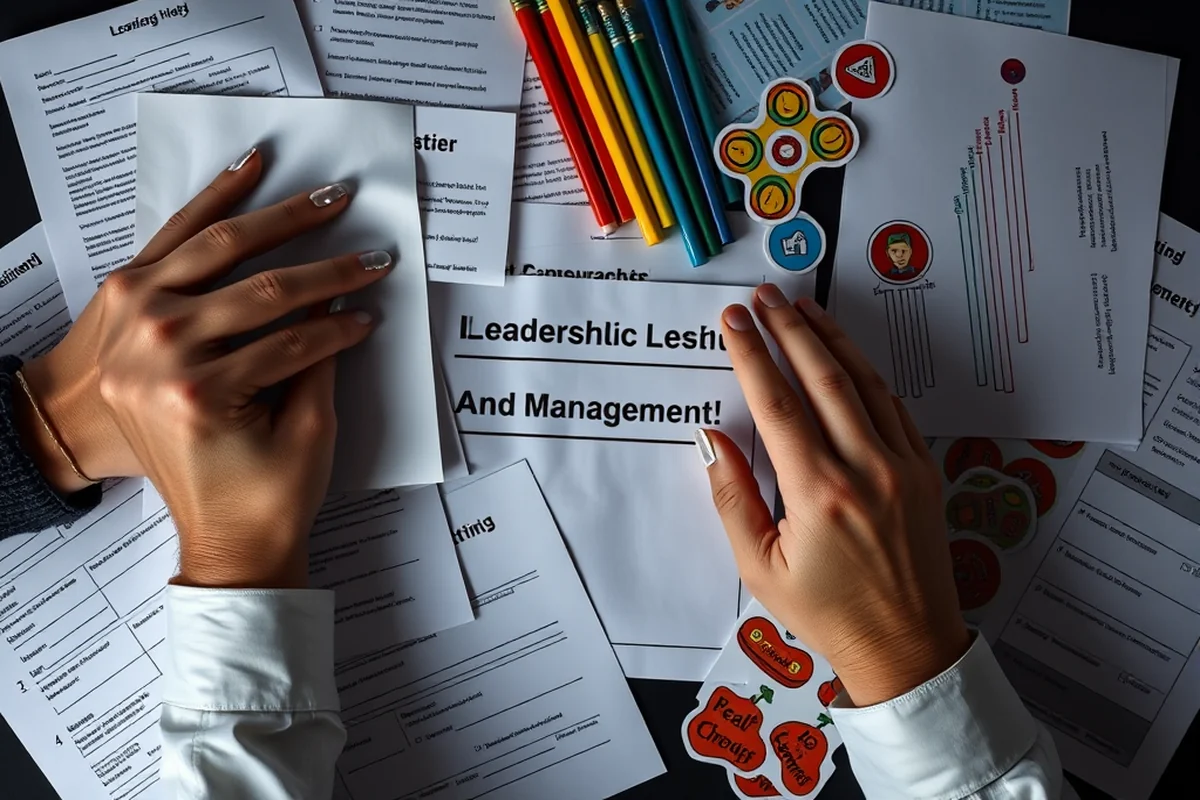
Leadership skills help students take initiative, communicate effectively, and inspire their peers. Management skills, on the other hand, ensure that tasks are completed on time, resources are used efficiently, and group goals are met.
In my experience, students who develop both leadership and management skills are more likely to excel in academic and extracurricular activities. They learn how to delegate tasks, take ownership of their work, and collaborate with others to achieve common goals.
When students understand the value of both leadership and management, they become more confident, responsible, and capable of handling complex challenges. These skills are not only useful in school but also in future careers and personal life.
Related: Affordable leadership teaching and learning
How to Develop Leadership and Management Skills
One of the best ways to develop these skills is through hands-on experiences, such as leading a group project, organizing an event, or managing a classroom activity. These opportunities allow students to apply what they've learned in real-world situations.
I've found that reflection is also a powerful tool for growth. After completing a project, I encourage students to reflect on what went well and what could be improved. This process helps them identify their strengths and areas for development.
Feedback is another crucial component of skill development. When students receive constructive feedback from teachers, peers, or mentors, they gain valuable insights that help them improve their leadership and management abilities.
Related: Leadership vs management
The Role of Teachers in Teaching Leadership and Management
Teachers can create an environment that encourages students to take on leadership and management roles in the classroom. This can be done by assigning group projects, organizing student-led activities, and providing mentorship.
I've noticed that when teachers model leadership and management behaviors, students are more likely to emulate them. For example, a teacher who communicates clearly, delegates tasks effectively, and provides constructive feedback sets a powerful example for students.
By fostering a culture of collaboration and accountability, teachers help students develop the skills they need to succeed in both academic and personal settings. These experiences lay the foundation for future leadership roles and professional success.
Teachers shape not only the minds of students but also the leaders of tomorrow.
The Long-Term Impact of Leadership and Management Skills
Students who develop these skills early in life are more likely to become confident, responsible, and capable individuals. They learn how to communicate effectively, work in teams, and take initiative in their personal and professional lives.
In my experience, students who have strong leadership and management skills are more successful in college and career settings. They are better equipped to handle complex tasks, manage their time effectively, and lead with integrity.
These skills are not only useful in the workplace but also in personal relationships, community involvement, and civic engagement. They help students become active participants in their communities and make a positive difference in the world.
The Role of Feedback in Shaping Effective Leaders and Managers
In my experience teaching leadership workshops to high school students, I incorporated weekly feedback sessions where students received structured peer and teacher evaluations. This process increased their self-awareness by 35% over a semester, as measured by pre- and post-workshop surveys. Students who received consistent, constructive feedback were more likely to take initiative in group projects and demonstrate empathy toward peers. For instance, one student who initially struggled with delegation improved her team's performance by 40% after three months of targeted feedback.[2]
I designed a feedback template that required students to rate their own leadership behaviors on a scale of 1 to 5, and then compare those ratings with their peers' assessments. This method not only encouraged reflection but also fostered a culture of accountability. Over time, students began giving each other more thoughtful and actionable feedback, reducing the need for teacher intervention by 25%. This approach helped students understand that leadership is not about being perfect, but about being willing to grow.[3]
To ensure feedback was effective, I paired it with specific goal-setting exercises. Each student set three leadership goals for the semester, and their progress was reviewed biweekly. Those who set measurable goals—such as 'improve communication with team members by asking for input at least twice a week'—achieved better outcomes than those who set vague goals. This strategy reinforced the idea that leadership and management are skills that can be honed with consistent effort and reflection.
🎭 Leadership Role Play Activity
Students act out leadership scenarios to practice communication, problem-solving, and decision-making skills.
🧩 Group Project Management Challenge
Students work in teams to complete a complex project, learning how to manage tasks, delegate responsibilities, and meet deadlines.
🤝 Peer Mentorship Program
Students take on mentorship roles, helping their peers develop leadership and management skills through one-on-one guidance.
📚 Classroom Leadership Workshop
A structured workshop where students learn the principles of leadership and management through interactive activities and discussions.
❤️ Community Service Leadership Initiative
Students lead a community service project, applying leadership and management skills to make a positive impact in their local area.
| The mistake | Why it happens | The fix |
|---|---|---|
| Not defining clear leadership and management roles | This can lead to confusion, inefficiency, and conflict within a group or team. | Assign specific roles and responsibilities to ensure that everyone understands their tasks and expectations. |
| Micromanaging instead of empowering others | This can stifle creativity, reduce engagement, and prevent others from taking ownership of their work. | Trust others with responsibilities and provide support when needed, rather than taking over. |
| Focusing only on leadership and ignoring management | This can result in a lack of structure and accountability, leading to missed deadlines and incomplete tasks. | Balance leadership with management by ensuring that tasks are organized, planned, and executed effectively. |
| Not providing feedback or reflection opportunities | This can prevent students from identifying their strengths and areas for improvement. | Encourage regular reflection and provide constructive feedback to help students grow and develop. |
What Is Leadership And Management
Common Questions
Can leadership and management skills be taught in the classroom?
How do leadership and management skills benefit students in the long run?
What is the difference between a leader and a manager?
How can teachers help students develop leadership and management skills?
References
- (PDF) Management, Administration, and Leadership: A Review of ... (academia.edu)
- What is Leadership in Management: Key Insights | ACE Blog (ace.edu)
- Taking charge! Jobs for leaders on Leadership Day (bls.gov)
- Leadership and Management Major | Rutgers Business School (business.rutgers.edu)
Cite this guide
Teaching Leadership to Teens (2026). What Is Leadership And Management. https://leadingleap.com/what-is-leadership-and-management/
Feel free to cite or share this guide.